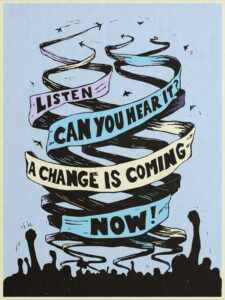
In our time of widespread crisis, how do we keep going in the struggle for a more just and sustainable world? Join us for a talk and book launch with longtime activist and writer Chris Dixon to explore practical answers to this question. Drawing on organizing experiences and movement histories, Chris will talk about developing transformative movements that endure. He will focus particularly on collective conditions – such as modes of organization, practices of care, and methods of planning – that enable people to stick around, fight, and build together.
Following the talk, there will be lots of space to think and talk together about challenges our movements face today and what we are learning together as we grapple with them.
Tuesday, September 22 6:30pm (doors open at 6:00pm) Parlour Room, Carleton Dominion-Chalmers Centre 290 Lisgar Street Ottawa, on unceded Algonquin territory
Hybrid Event Info:
This event will be held both in-person and online via Zoom. If you wish to attend virtually, please register by clicking the ‘Reserve a Spot’ button on the Eventbrite page. If attending in-person, there is no need to reserve a spot.
Accessibility Info:
The Carleton Dominion-Chalmers Centre (CDCC) is accessible via a ramp with railing on the Lisgar door side of the building, with automatic door-openers, and washrooms with open doors and a large stall with handrails on the first floor. Chairs in the room will be moveable, and there are chairs available with no armrests as well as couch/upholstered chairs. The Parlour Room is accessed via elevator or stairs, and there are gender-neutral washrooms on the same floor. The room has both florescent and non-florescent lights.
We will not have separate childcare for this event, but kids are welcome to attend and be present in the space. We will have drawing supplies, books, and puzzles on site.
This event is in English. Please contact us by September 12th if you need live captioning for access.
Paid parking is available in the CDCC lot on Lisgar.
We request all participants refrain from wearing scents to better allow people with chemical sensitivities to attend. If you are feeling sick, sneezing or coughing, or have been exposed to covid or the flu, we ask that you attend remotely or wear a N95 mask. We will have masks on hand, two air filters running in the space, and the windows open if possible.
This event will not be recorded.
Please email punchup@riseup.net if you have accessibility needs not identified here.
Sponsors:
Punch Up Collective, Between the Lines, Octopus Books, and the Carleton University Department of Sociology and Anthropology
About the book:
For the Long Haul: How to Stay in the Fight for a Better World addresses the question of how to sustain long-term involvement in transformative social movements. It takes up this question with a particular focus on our time of compounding crises and widely-felt urgency. This urgency, the book argues, is absolutely warranted; creating a just and habitable future requires dramatic social transformation on a massive scale.
But we can’t make this happen instantaneously. Instead, changing the world will require large numbers of ordinary people moving into action, bringing more and more people along with them, and constellating powerful new collectivities. To win in significant ways, we will have to build and sustain movements, propelled by urgency, that move at a pace that we can maintain, collectively, for years to come. This is the long haul.
Written in a compact and accessible manner, For the Long Haul takes up the question of activist longevity through five chapter-length propositions. Each chapter names a key obstacle to movement durability and then elaborates practical tools for contending with the obstacle and nourishing long-haul organizing. Focusing on the U.S. and Canada, For the Long Haul is based on interviews with and writings by seasoned organizers, experiences of past and present-day political formations, and a broad range of movement histories.
About Chris:
Chris Dixon is an activist, writer, and educator with more than three decades of experience in radical social movements in the U.S. and Canada. Originally from Alaska, he now lives in Ottawa, on unceded Algonquin territory. Dixon is a member of Punch Up Collective and serves on the advisory board for Upping the Anti. Formally trained as a scholar of social movements, his writing has circulated widely and he speaks regularly about strategy, radical organizing, left history, and movement-based research. His first book was Another Politics: Talking Across Today’s Transformative Movements. Find him at writingwithmovements.com.
Powerful and profound work continues to be done on how to respond interpersonal harm within social justice groups after it happens. But are there things we can do to create an environment within our organizations that limits the likelihood of harm occurring in the first place? All Ottawa-area organizers and activists are invited to a discussion facilitated by the Punch Up Collective exploring this idea.
This post contains a range of details about the event, but should you have additional questions please do not hesitate to get in touch.
CONTENTS
1. Event Details 2. Registration 3. Cost 4. Reading 5. Accessibility 6. About Punch Up Collective 7. Contact Information
1. Event Details
Facilitated by the Punch Up Collective, this event is for anyone interested in building social justice groups that are less hospitable to interpersonal harm and more generative of trust, intentionality, and effectiveness. We will present our recent Briarpatch article “Planning to Be Good to Each Other” and facilitate a discussion about infrastructures and practices that might help prevent harm.
Content Warning: This event will involve a facilitated discussion about preventing harm withing social justice groups. While the intention is not to focus on specific harmful events or behaviours as part of the event, participants should be aware that issues of harm and trauma, in a variety of forms, may be discussed.
Wednesday, May 13th, 2026 6:30-8:00pm (doors open at 6:15pm) Ottawa location to be shared with registered participants
Number of participants: 35 (max)
2. Registration
To register, please fill out this form. Because this event has limited attendance, we would like people to register by Friday, May 8. If you’ve registered but won’t be able to attend, please also tell us that by emailing punchup@riseup.net.
3. Cost
There is no cost to participate in this event; if you have means, donations to help cover the cost of the room rental ($90) are welcome.
4. Reading
It’s not necessary but we encourage people attending this event to read the article upon which it is based.
5. Accessibility
Masks will be required for this workshop and we will have some on hand if you need one. We will have at least two air purifiers running in the space.
The workshop is taking place in a space that is accessible by ramp.
There is a washroom that is wheelchair accessible.
We request all participants refrain from wearing scents to better allow people with chemical sensitivities to attend.
If you have any accessibility needs not listed here, please get in touch with us.
6. About Punch Up Collective
Punch Up is a small anarchist collective based in Ottawa, Ontario, on unceded Algonquin land. A more detailed description of the collective is available here.
7. Contact Information
The Punch Up Collective can be reached at punchup@riseup.net.
Briarpatch just published this article we wrote. We’re posting the plain text version here. For the version with beautiful graphics, go here. For an audio version of this article, listen above
Over the last decade, our small collective in Ottawa has regularly heard from people who have been raped, stalked, abused, or otherwise profoundly harmed by other activists in our city. Given the amount of interpersonal violence that suffuses our world right now, we haven’t been hugely surprised to hear these stories. Still, it breaks our hearts to know that we continue to harm one another in these ways, even in groups aiming to build a better world.
We’ve seen a wide spectrum of responses among activists to people disclosing harms. These responses have included formal processes rooted in transformative justice principles, informal sharing of accounts of harm, and experienced activists saying they don’t believe anything bad happened at all.
When people have told our collective details about harm they’ve experienced, they’ve sometimes asked us to just hold the knowledge of what was done to them without telling anyone else, or to tell them if their abuser registers for an event that we’re hosting. Sometimes we’ve been asked to not promote the work their rapist continues to do.
We have no critique of anyone’s response to being harmed, and we firmly believe that building better responses is absolutely necessary. Tremendous work has been done, and continues to be done, on transformative justice models and in thinking about what non-carceral community accountability can look like. Inspired by that work, one of the first things we did after forming our collective in 2014 was to establish our own conflict and accountability policy and process.
But we’re increasingly convinced that it’s valuable – indeed, essential – to focus also on how we can decrease harm in activist spaces. Every time someone comes to us to tell us about abuse in our city, we ask ourselves what we could have done to avert it. In general, we think it’s better to prevent harm than to have even the most amazing mechanisms for addressing it after it occurs.
From Response to Prevention
Rape and sexual predation are some of the most extreme forms of social harm we have encountered, but they are not the only ones. A range of forms of harm and boundary violation can be found in activist spaces. For instance, when activists trash-talk someone else in a scene or convince others to ostracize them without good reasons, when someone is angry and lashes out destructively at others, or when someone is made to feel like they are the only person who can keep a project going and they overwork themself and burn out – we can see all of these as examples of harm and boundaries violations.
There are important differences between harm, boundary violations, and conflicts. Discerning these differences, we’ve come to realize, isn’t always easy. For help navigating this, we look to Creative Interventions, an Oakland-based organization working on community-based responses to interpersonal violence. They define harm as “[s]ome form of injury to a person, group, or community. This injury can be of many types: physical, financial, emotional, sexual, spiritual, environmental and so on.”
For us, preventing harm isn’t just about having explicit procedures for responding to it. It’s also about the kinds of collective practices and structures through which we organize and interact, some of which may not seem to be explicitly about harm. We’ve come to believe that this kind of social infrastructure is an essential element of proactively preventing rape and other forms of harm inside activist scenes.
We’ve also come to think that changing our infrastructural practices can help prevent burning people out, defuse tiring conflicts before they start, and build resilient organizations that can grow and change. We think there’s a lot of potential for activists and progressive organizations to build on our strengths here.
Infrastructure
Infrastructure is the taken-for-granted background to our activities, the rails on which the train of liberation – or oppression – runs. We can think of infrastructure as both built and social. In our physical world, built infrastructure encodes standards and guidelines that manifest some of our social commitments: the gauge of wire electricians use must conform to certain criteria aimed at reducing the risk of fire; the pipes that carry water should ideally not leach lead.
Social infrastructure also shapes our world, in everything from identity documents to contract law. Many infrastructural things fade into the background of our experiences and therefore can be difficult to address or transform.
Infrastructure is crucial for social movements, and many have intentionally transformed the taken-for-granted social and material practices they inherit to generate new forms of living and being together. This shows up everywhere, from how we convene a meeting to how we feed people and clean up after events. If we can change our infrastructure in these ways – and we can – then changing infrastructure to prevent harm is well within our capacities as activists. Building different social infrastructure can shift the preconditions for how we relate with one another – which in turn can help to prevent us from harming one another.
A key assumption here, for us, is that without deliberate intention, we will tend to reproduce existing power relations in our activist groups. These power relations play a key role in enabling harm within our communities. Middle-class and rich people are often very comfortable making decisions for others; people with university or professional credentials might tend to have an easy time speaking in public; men can feel very sure of themselves; and so on.
Simply deciding to do better won’t disrupt oppressive social hierarchies, and critiquing people when they talk too much or take on only the public-facing roles doesn’t really work, either. What we need are the right kinds of infrastructure that create a different set of practices to structurally disrupt the habits of social hierarchies and build meaningful relationships of trust and accountability.
Here are some ideas about how transforming or building new infrastructure can help to address the conditions that enable harm within our communities. Some of these are structural considerations, some are meeting tools, and some are about building intentionality in group design.
1. Build people’s capacities
Over the past 50 years, people’s capacities for collective work have been systematically deskilled. Our capabilities for working, planning, and making decisions together in groups have been displaced by vertical relations that centralize decision-making and foster the specialization of skills. While this deskilling closely maps social relations of oppression and advantage, it has affected everyone. This deskilling has reduced our collective capacity to readily take on tasks key to building sustainable infrastructure, leading to situations where particular individuals usually have responsibility for specific tasks. Often in groups there might be one person who always takes on facilitating, another who does the tech work, or other specific people who hold emotional labour, and so on.
The specialization of labour can be a good thing – not everyone needs to do everything. But when we don’t have training and support to get better together at all of the skills involved in activist work, our movements suffer. People burn out, or they don’t get a chance to try things out that are intimidating but that may help them discover new abilities. And a simple reversal is not transformation – we don’t just want already-confident people to never participate in meetings. We want everyone to have the confidence to speak, participate, and initiate.
To achieve this, we need to build more consistent, skills-based training. This could include training on public speaking, writing press releases, caring for kids, strategic planning, conflict resolution, logistical coordination, event planning, and non-hierarchical decision making, among other skills.
All of us benefit from building our capacities, whether this is figuring out how to work with others or deepening skills that matter to us. When we sincerely commit to expanding the skills and capacities of all of us, we reduce the likelihood that our organizations and relationships will reproduce existing harmful power dynamics.
2. Build a foundation of trust and accountability
Too frequently we’re involved in isolated, ad hoc, or crisis-oriented activist spaces – spaces that often don’t offer the opportunity to build meaningful relationships or trust in one another. This can mean that people expect others to launch into high-risk actions, weather prolonged conflicts, or forgive bad behaviour simply because they have a shared political commitment to an issue. Creating spaces and formations that are intentional about relationship-building helps to prevent harm by fostering trust and accountability among everyone involved.
We can learn from successful movements how to build political relationships for the long haul and across issues. Not everyone has to be friends, but we do need to feel like we can count on one another, or at least we need to feel like we can count on some people. A big part of this is just investing time. When individuals show up and do what they say they’re going to do, we come to trust that they’ll keep doing that – or if they drop the ball that there’s a good reason.
Organizationally, this means investing time in doing things together, focusing not just on the political work but also on the human practice of being together. It means relating with people as full participants in struggle rather than as pawns to carry out activities determined by others. It might also mean doing some of this work across organizations, in order to build relationships of trust between and among groups.
In many activist spaces these days, there is a perception that the way to keep one another safe is to avoid disclosing our identities to one another. As a result, we have big Signal or Telegram group threads, often with ever-changing nicknames, and actions announced at the very last minute. When we talk about building an infrastructure of trust and accountability, we’re suggesting that knowing one another is a better practice for collective safety.
Activists of the past built trust through formations such as affinity groups and collectives. Today we often see people finding connection through crafting together, bike clubs, book groups, or neighbourhood food-sharing. There is no set form through which activists come to know one another. But as the Toronto-based Mining Injustice Solidarity Network points out in their reflection on having their group infiltrated by state agents, building trust is one of our best forms of security.
3. Build correction mechanisms when things are small
Many of us have a deep aversion to conflict and fear criticism or messing up, so problems can build for a long time until they become really serious. The modes of criticism we have available to us can also be pretty destructive and biting. All too often people use criticism of others as a self-protective mechanism, as if identifying something someone else is doing wrong means they, themselves, won’t be criticized. Meanwhile, our conflict-resolution skills aren’t well-developed. Many of us carry substantial trauma, and the available models of giving and receiving feedback can often feel punitive.
We should try to make it possible, before smaller issues can accrete into something more serious, to raise problems or concerns within groups. We can intentionally develop ways for people to cultivate modes of giving and receiving feedback with more kindness.
We want to explore moving away from models that rely on one person as solely responsible for mediating conflict, and build structures that allow for, and even invite, more direct feedback.
When conflict comes up inside activist groups, people often call for someone “in charge” to investigate what happened and punish the wrongdoer. What would it look like to move beyond the tools employed by the legal system and human resources departments and build our own expectations of how we would like one another to behave? Answers to these questions will be specific and unique to each group or project, but it can often be very helpful to have an explicit conversation about how to handle conflicts or misunderstandings before they arise.
4. Recognize and respect our limits
Because things are quickly descending into fascism and ecological collapse, the work of organizing toward social, environmental, and economic justice is incredibly urgent. This means that people and organizations often overcommit, taking on more than they can realistically do. This can lead to violating our own boundaries, pushing heroically to accomplish things in the short term, even if we do ourselves or others sustained damage in the process.
Chronic over-extension leads us and our organizations to be depleted, burnt out, and unable to adequately follow through on our commitments to one another. This creates situations in which harm is more likely to occur. We think about this tendency toward personal overcommitment as just another facet in the relations of domination that need to be transformed: even if we’re not oppressing someone else, being in a relationship of domination over ourselves isn’t good.
If we want to stay in struggle for the long term and build resilient and caring collective spaces, we need to resist taking on more than we can do. This requires knowing our capacities, which is difficult; becoming stronger and softer; slowing down when we need to; and setting different group norms. Instead of valorizing martyrdom and heroic exhaustion, we can lift up ideals of steadiness and care. We see more people resting before getting burnt out and prioritizing moving at a sustainable pace.
We can deliberately take up a habit of asking for help when we are unable to follow through on our commitments. This requires a shift in organizational culture and collective expectations, so that the individual work of holding boundaries does not simply dump more tasks and responsibilities onto others. We want to stress that this is important not only because we don’t want a culture that encourages burnout, but also because overcommitting and then not following through actually makes it harder to get sustained work done.
In practice, doing things like a task review at the end of meetings can enable collectively noticing when people are taking on too many tasks and redistributing them. We can refocus organizing conversations from what work would be “good” or “important” to the question of “who has time and inspiration to actually do this work?” This helps to avoid a dynamic in which the group has committed to do something but no one in the group actually has taken responsibility for doing it!
5. Be deliberate about membership
When conflict arises in activist scenes, people often call for “community accountability.” But community accountability is most effective when there’s an actual “community” that can be aware of, respond to, hold its members accountable for harm and – crucially – hold themselves accountable for how they respond to harm in their community. And while “community” is a difficult thing to define, we can be clear and transparent about what it means to be part of a group. Many activist groups have a very fuzzy definition of membership, at best. Most don’t have any definition of membership at all.
This fuzziness can make organizing difficult for all kinds of practical reasons. It can be tough to ensure follow through when no one really knows who will show up from meeting to meeting. In addition, membership fuzziness leaves our organizing efforts open to disruption, whether intentional or unintentional. It also makes it difficult for activists to build relationships of trust and understanding with one another, or a shared understanding of how they are accountable to each other, to other groups, and to the wider community. Not having clear membership can make it difficult, as well, to hold an organization accountable for harm caused by individuals associated with that organization.
Organizations should be intentional about how they approach the question of membership. For example, if the decision-making process is consensus-based, does anyone who happens to show up to a given meeting have the power to block a decision? If not, how do you decide who has standing to set group priorities?
We think it can be quite valuable for organizations to have a clearly defined membership as a way of creating accountability, both within the organization and between the organization and the wider community. Of course, what membership might look like from group to group will no doubt vary widely, based on specific politics and goals. But not thinking through the membership question undermines efforts to prevent harm from occurring, or responding effectively once it does.
Making Movements Less Hospitable to Harm
None of these ideas will transform our communities overnight, nor are they the only ideas that might have positive impacts in activist spaces. We’ve offered these suggestions as just one part of the ongoing conversation about movement building at this moment. But we do believe that building and strengthening infrastructural practices can aid us in both reducing the possibility of harm occurring in our groups and in responding to harm once it occurs.
Using these sorts of practices to shift organizational cultures and establish new habits, we can begin to build groups that are more capable, communicative, deliberate, and durable. We can lay the groundwork for organizations – and, we hope, movements – that are less hospitable to harm and more generative of trust and accountability. In doing so, we will expand our collective abilities to both undermine oppressive social hierarchies and build a better world, together.
We will be facilitating our “Getting It Together: Organizing Collectives for the Real World” workshop on the afternoon of Saturday, October 4th, 2025. This workshop is for anyone interested in starting a collective, or those keen to discuss how to make a collective they’re already a part of more effective and sustainable.
This workshop will be capped at a maximum of 35 participants. This post contains a range of details about the event, but should you have additional questions please do not hesitate to get in touch.
CONTENTS
1. Event Description and Details 2. Registration 3. Cost 4. Reading 5. Accessibility 6. About Punch Up Collective 7. Contact Information
1. Event Description and Details
Saturday, October 4th, 2025 12-4pm (doors open at 11:30am) Room 201, Jack Purcell Community Centre 320 Jack Purcell Lane Ottawa, on unceded Algonquin territory
Number of participants: 35 (max)
We live in a frightening and unpredictable period, faced with the growing challenges of climate catastrophe, genocide, ongoing economic austerity and state violence, and emboldened white supremacy. Countering these challenges will take widespread, powerful, and resilient social movements that can sustain themselves over the long haul. But how do we get from here to there, when so many of our organizations and projects seem temporary, ad hoc, and dysfunctional?
We think building vibrant, sustainable collectives in our communities is a good place to start. This workshop hopes to help contribute to that conversation in Ottawa. Some topics the workshop will cover include:
what exactly is a collective?
why meaningful anti-oppression analysis and practice is essential for collectives
tools and features of effective collectives
how are collectives structured?
plus plenty of time for discussion and reflection on the experiences of participants
The workshop will last 4 hours (with breaks, of course) and be facilitated by the members of the Punch Up Collective. It will be capped at 35 participants.
2. Registration
To register, please fill out this form: forms.gle/U7ut3CZZd5r8pkuT7. Because this workshop has limited attendance, we would like people to register by Tuesday, September 30th, by 9am. If you’ve registered but won’t be able to attend, please also tell us that by emailing punchup@riseup.net.
3. Cost
There is no cost to participate in this event; if you have means, donations to help cover the cost of the room rental ($175) are welcome.
Masks will be required for this workshop and we will have some on hand if you need one.
The room where the workshop is taking place is on the second floor. There is an elevator.
The first floor has gender-segregated wheelchair accessible washrooms. On the 2nd floor, there is a washroom that is wheelchair accessible and unisex (gender neutral).
We request all participants refrain from wearing scents to better allow people with chemical sensitivities to attend.
If you have any accessibility needs not listed here, please get in touch with us.
6. About Punch Up Collective
Punch Up is a small anarchist collective based in Ottawa, Ontario, on unceded Algonquin land. A more detailed description of the collective is available on our website: punchupcollective.org
7. Contact Information
The Punch Up Collective can be reached at punchup@riseup.net or punchupcollective.org
In the northern hemisphere, the first day of May is a moment to enjoy the stirrings of life after winter. As International Workers’ Day, May Day is also a moment for waged and unwaged workers across the world to pause and celebrate our collective power. May Day is our holiday, all of us who stand on the side of the earth and the oppressed.
May Day is a day to recognize all who labour – paid and unpaid, formal and informal, in care work and field work – all of the activities that sustain us and our community. It’s a day to recommit to forging solidarity across borders against exploitation and dispossession. Above all, May Day honours the power of ordinary people, working together, to shape the conditions of our lives.
Things are getting harder. People are struggling to get by, the rich are getting richer, the ecological crisis is intensifying, Palestine is enduring unspeakable horrors, authoritarianism is growing more ascendant globally, and ruling officials are offering us little more than flag-waving and immigrant-blaming. In these circumstances, it’s all the more crucial to remember that collective struggle from below is a source of joy and the way that we win.
In previous years in Ottawa, May Day hasn’t been just a single day, but has included many different events, marches, celebrations, and more. In 2025 this tradition comes back! The month will start with a march on May 1st and conclude with protests of the yearly CANSEC arms fair. You can find participating events on the May Day Ottawa webpage!
The May Day March, sponsored by more than 20 groups in Ottawa, will be on Thursday, May 1st, 2025, starting at Confederation Park (Elgin St @ Laurier Ave). It will go from 5:00pm – 7:00pm, with stops along the route where host groups will share relevant local struggles. Find more information here!
Saturday May 4th, 1:00pm – 3:00pm Location: Jack Purcell Community Centre – 320 Jack Purcell Lane (just off Elgin St.)
This event will go ahead RAIN or SHINE! We hope to hold this event outside but if the weather looks dicey, we have a lovely room inside Jack Purcell ready to go.
Join Punch Up Collective and your favourite radicals in Ottawa for an picnic to celebrating May Day and our collective struggles for a better world!
May Day is a really important holiday for us! It’s a chance for us to remember and lift up all those in the past and present working to make this world a more just, livable, and delightful place for everyone. We hope the May Day Picnic will be a chance for us to come together and share stories about all the wonderful, inspiring, and powerful organizing taking place in Ottawa and beyond. Plus, who doesn’t just love a picnic with pals!
Let’s get together to share stories, make new friends, and collectively imagine possibilities for worlds beyond capitalism, colonialism, and extractivism.
The picnic will feature collaborative banners to color and draw on, face-painting, and other activities. Plus, it’s a park, with playground equipment and plenty of space to run around. Feel free to bring your outdoor activity of choice!
Food and Drink
Punch Up plans to provide some fruit, snacks, and drinks to share with everyone. But feel free to go all in on the picnic theme and bring snacks for yourself, or to share.
IF you do plan to bring a food to share, we will have materials on hand so you can label your shareable goodies (i.e. vegan, contains nuts, gluten-free, etc). If a kid at the potluck isn’t under your care, please check with their adult(s) before you feed them any food!
Punch Up will bring a few spare plates and cutlery, but please bring your own dishes and utensils to use for eating if at all possible.
And of course, there’s no need to bring any food! You’re more than welcome to just come and eat. There’s almost always more than enough food to go around.
Kids, friends, lovers, and others all welcome.
Accessibility
If the weather is good, the event will take place in the outdoor park space behind Jack Purcell Community Centre. If the weather is dicey, we will be using a room inside the Centre. This room is on the first floor and is wheelchair accessible.
The first floor has gender-segregated wheelchair accessible washrooms. On the 2nd floor, there is a washroom that is wheelchair accessible and gender neutral. There is elevator access to the second floor.
We request all participants refrain from wearing scents to better allow people with chemical sensitivities to attend.
If you have any other accessibility needs not listed here, please get in touch with us at punchup@riseup.net.
COVID Precautions
While masking is not required, N95 masks and hand sanitizer will be provided. We encourage anyone exhibiting symptoms of COVID or other respiratory illness to consider not attending. We will have two Hepa filters and a CR box if we are inside.
This year Punch Up Collective hosted our seventh contribution to recognizing May Day in Ottawa: a kid-centred picnic and short march. We wanted to share something about why this was so fun and to reflect a little on including kids and families in these kinds of celebrations, and the difference between including them and focusing events on kids and families.
We’ve done a mix of things to recognize May Day – sometimes events, sometimes workshops or other things that we hope contribute to carrying on the legacy of struggle for dignity and joy for everyone. Our first May Day event, in 2015, was a called “All In: Worker Organizing Beyond the Mainstream Labour Movement.” It was a panel featuring people talking about sex work, migrant labour, harm reduction workers, and drug users. As part of our planning for the event, we paid a local comrade who ran a daycare to bring toys and activities and set up a kids space. No one brought their kids. That same year we ran a workshop called “Planning to be Good to Each Other” about building social harm reduction practices in radical groups; again we set up childcare, again no kids were there.
In 2016, we organized a showing of the Lego movie at a community centre, with a video projector, legos, and popcorn. A bunch of families came (and we, none of whom at the time had kids, had a chance to marvel at how many of the under-ten crowd had the whole Lego movie memorized, and at the sheer volume of popcorn kids can consume!). The next year we stepped back from publicly-oriented May Day organizing after the Revolutionary Communist Party took over the planned events. Instead, we hosted a potluck at a private house with no formal childcare situation, and a bunch of kids came. This was fun partially because there were also a bunch of non-parent people who really liked hanging out with the kids and their caregivers. And so the year after that, 2019, we decided to have a more elaborate potluck, with activities and someone explicitly ready to hang out with kids, at a local community centre. Very few people came at all, and only a few kids. It was a bummer.
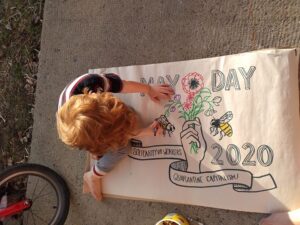
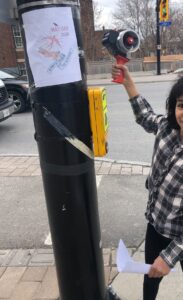
A normal collective might look at this litany and decide that there just isn’t the need in the local radical left to have formal kid care available at our events generally and May Day in particular. 2020’s May Day was the first one under the shadow of the pandemic, and we instead doubled down on trying to do something with kids in mind: we paid a local artist friend to make colouring pages under the label “Quarantine Capitalism,” and we shared them both here in Ottawa and online. People sent us wonderful pictures of people of all ages colouring these pages in and posting them up in public places.
In 2021, exhausted by zoom events and not prepared to gather in person, we sent out a May Day greeting card by mail. Last year, still not willing to get people together in person but reflecting on what we were hearing from people wanting more space to understand how to work together, we offered an online version of our workshop about how and why to build effective collectives.
So, that brings us up to this year. The pandemic is still ongoing, the weather in Ottawa at the beginning of May is very unpredictable, and still we decided to have an in-person, kid-focused thing outdoors. We were inspired by the 1947 Candy Bar Protest, when kids went on strike to bring the price of candy bars back down to 5 cents; this started in B.C. but circulated across the Canadian context, including actions in Calgary, Edmonton, Winnipeg, Montreal, Quebec City, Ottawa, Toronto, and the Maritimes. We consulted with some of our parent friends about our idea to have a kids parade with noisemakers (parents responded, “Have you considered that kids are noisemakers?”), story reading, and a banner making. They all said, “Sounds good! Not sure if we’ll be able to make it!”
It was raining hard on our planned date, and we had to postpone to the following Saturday morning. If you aren’t a parent, you may not know that Saturday mornings are for whatever reason the main time where – if you’ve been lucky enough to register for gymnastics or swimming between 9 PM when the city portal opens and 9:02 PM when everything is full – kids have Activities. So we rolled up to our planned location with our banner, noisemaker-making supplies, snacks, red and black flag, and queer flag, but without a lot of hope that any kids would come. At seven minutes after the planned start time, one of us asked, “How long should we give it before we pack it in?” and we spent some time reflecting on whether it had all been a mistake. We tried to call the person who’d agreed to contribute music to tell him maybe not to come. Luckily, he was biking over with his guitar, and so he missed our call, and thus was there when, bit by bit, a whole bunch of adults and kids showed up. Some people knew one another, many others didn’t know anyone. The kids got right down to work making drums out of buckets, shakers out of paper plates taped together with beans and grains inside, and decorating other noisemakers. Others drifted over to draw flowers, hearts, and other more mysterious things on our “Everything for Everyone” banner. People had snacks, and listened to a reading of Candy Bar War, and then some May Day themed songs. And at a certain point we got together to sing and march around.
It was a really beautiful day. Most of the kids there were between one and six. Many of the adults were aging anarchists, and many of us hadn’t seen one another for many years, since even before the pandemic started. This was the first thing since 2020 that we’d hosted in person and it felt weird and good to be together. We had thought that we’d be contributing just one piece to a bigger set of May Day celebrations in our city, but in the end this small event was the only observance in Ottawa. This has made us reflect on how we direct our energy for future years.
Although we’d invited people who aren’t parents or caregivers, mostly the people who came were pretty directly connected to the kids there in one way or another. Even though we reached out to parents we know, we didn’t connect with organizers in town like the folks working with Child Care Now, who are campaigning for universal publicly-funded childcare, nor did we reach out to our anarchist librarian friends who host kid-centred events in public spaces in Ottawa to see if they had ideas for activities leading up to the parade that might have brought in people we didn’t already know. In general, we were not thinking sufficiently strategically about the context in which we wanted to participate.
Of course, it’s also nice to just have a social space to celebrate May Day with other radicals. But even if that’s the goal, hosting public events where there’s space for people who don’t already know one another to meet needs to be deliberate and thoughtful. We’ve tried to practice this by moving from a model where we have existing events and just add child care to them to hosting more events that are explicitly political and that are conceptualized as being for kids and families from the start. Looking at other organizing that maintains a steady commitment to always offering something meaningful for kids to do, we think that this is not only worth doing but also just much more fun than the bifurcated spaces we see so much on the left, where things are either only for kids or only for adults. But figuring out the balance on this is still a work in progress for us.
In addition to the weekly REO List email, which will go out every Monday, we have replaced the text-only weekly events blog post with a persistent online visual calendar. This calendar format allows you to view upcoming events in different formats, and makes it much easier for groups to add or edit their own events. In addition, each event has it’s own individual permalink, making your event easily shareable by email, on socials, on other platforms, or even on good old fashioned posters and flyers.
The Radical Events Ottawa List has grown a lot since we launched it five years ago. It now goes out to hundreds of local organizers and activists weekly via our email list, website, Twitter, and Facebook. We’re hopeful these changes will help the REO List become even more useful for organizations looking to spread the word about their actions, campaigns, and events.
You can find more information how to submit events and general information about the REO List at this link.
May Day is a day to celebrate the collective power of workers – paid and unpaid, formal and informal, care work and field work – all of the activities that sustain us and our community.
This May Day, join Punch Up Collective for a kid and family oriented May Day Parade!
Saturday, May 6th, 9:30-11:30AM City Hall South Lawn (Lisgar Street)
We’ll have stations to make banners and noisemakers (or bring your own!), and we’ll tell stories about kids harnessing their collective power. Then we’ll rabble-rouse, chant and march our way around the City Hall grounds.
Kiddos of all ages are welcome! (And grown-ups of course too)
We’ll have masks available, as well as snacks.
If you have any accessibility needs, please let us know how we can support your active participation in this event! You can email us at punchup@riseup.net.



 1. Event Description and Details
 This year Punch Up Collective hosted our seventh contribution to recognizing May Day in Ottawa: a kid-centred picnic and short march. We wanted to share something about why this was so fun and to reflect a little on including kids and families in these kinds of celebrations, and the difference between including them and focusing events on kids and families.
 mal collective might look at this litany and decide that there just isn’t the need in the local radical left to have formal kid care available at our events generally and May Day in particular. 2020’s May Day was the first one under the shadow of the pandemic, and we instead doubled down on trying to do something with kids in mind: we paid a local artist friend to make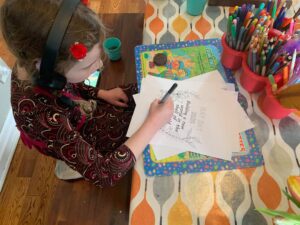

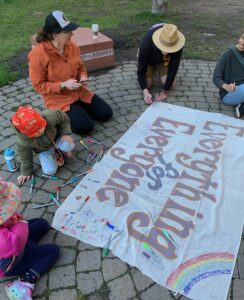 music to tell him maybe not to come. Luckily, he was biking over with his guitar, and so he missed our call, and thus was there when, bit by bit, a whole bunch of adults and kids showed up. Some people knew one another, many others didn’t know anyone. The kids got right down to work making drums out of buckets, shakers out of paper plates taped together with beans and grains inside, and decorating other noisemakers. Others drifted over to draw flowers, hearts, and other more mysterious things on our “Everything for Everyone” banner. People had snacks, and listened to a reading of
 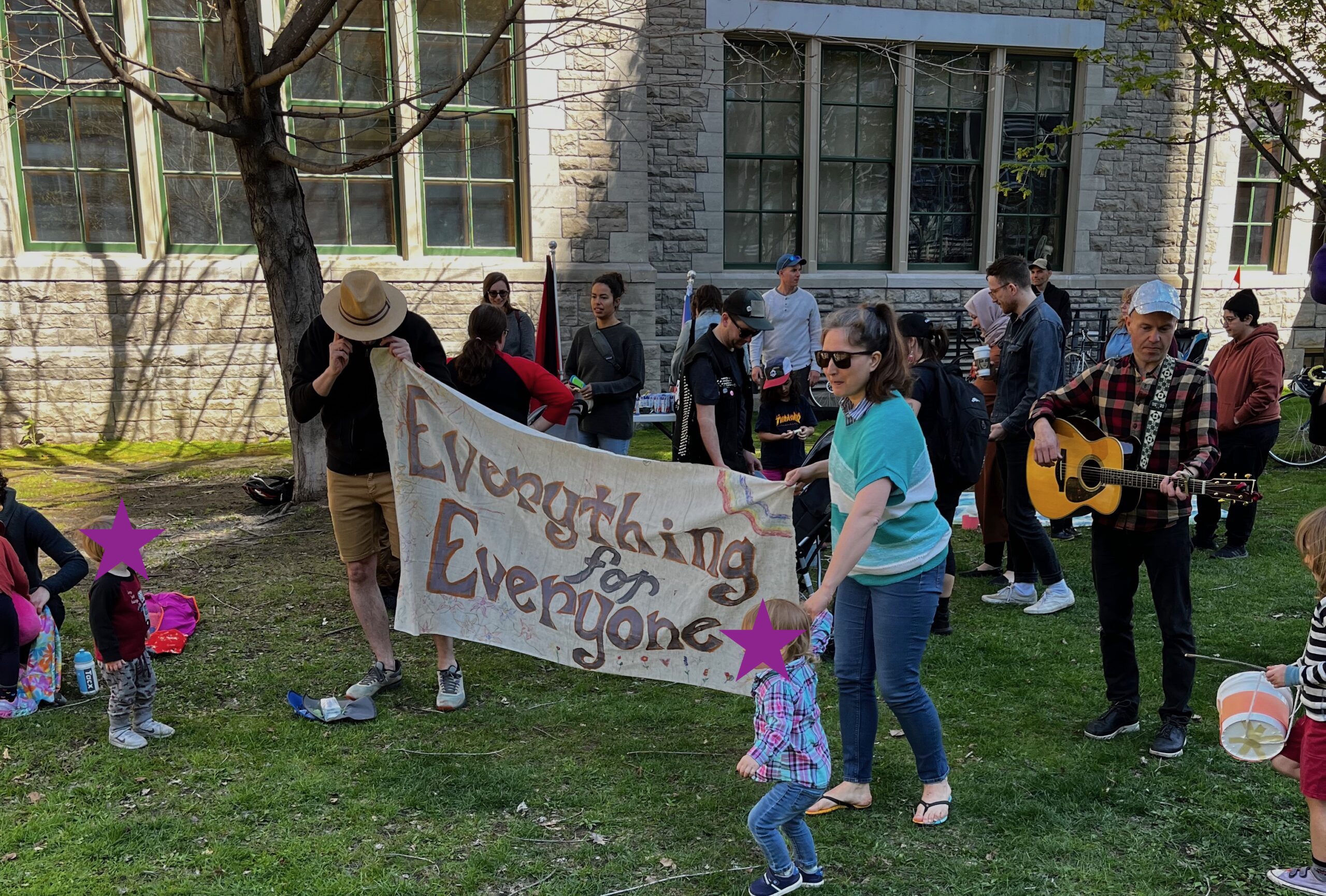 Although we’d invited people who aren’t parents or caregivers, mostly the people who came were pretty directly connected to the kids there in one way or another. Even though we reached out to parents we know, we didn’t connect with organizers in town like the folks working with Child Care Now, who are campaigning for universal publicly-funded childcare, nor did we reach out to our anarchist librarian friends who host kid-centred events in public spaces in Ottawa to see if they had ideas for activities leading up to the parade that might have brought in people we didn’t already know. In general, we were not thinking sufficiently strategically about the context in which we wanted to participate.